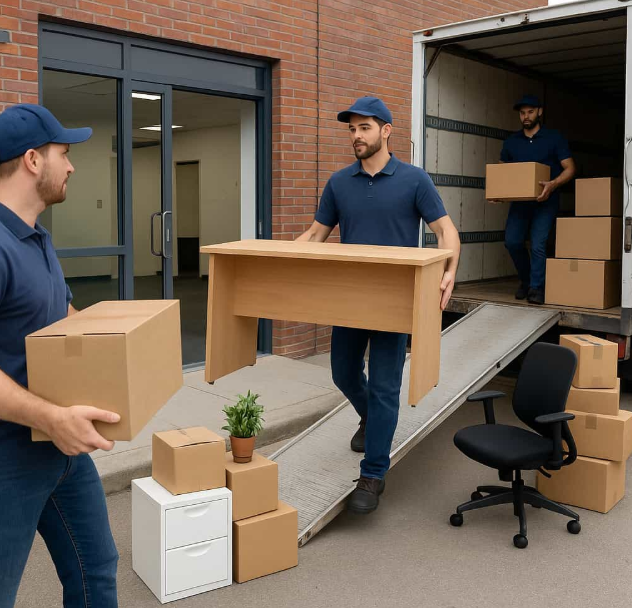
Relocating a commercial workspace represents one of the most significant undertakings any organisation can face. The process involves countless moving parts, from packing sensitive equipment to coordinating logistics across departments. Whilst some businesses consider handling these tasks internally, partnering with experienced office movers offers distinct advantages that extend far beyond simple transportation. Understanding what professional relocators bring to the table can help decision-makers choose the smartest path forward for their organisation’s transition.
Minimised Business Disruption
Most people overlook the real cost of a move. It’s not the removalist fee. It’s the lost productivity whilst your team sits around waiting for desks to be reassembled. A marketing agency in Melbourne discovered this the hard way when their DIY move stretched across several weeks. Their creative team ended up working from coffee shops. Client deadlines were missed. Professional relocators treat downtime like the enemy it is. They’ll have your entire operation dismantled, transported, and ready to function again before your competitors even notice you’ve changed addresses. The difference between a weekend move and a lengthy saga can mean keeping clients or watching them walk away.
Specialised Equipment and Expertise
Those ergonomic chairs everyone in your office loves cost a fortune. They’re engineered with precision gas lifts and calibrated lumbar support. Drop one incorrectly and you’ve just created an expensive paperweight. Professional movers don’t just know how to lift heavy things. They understand the mechanics of commercial furniture. They recognise which filing cabinets need to be emptied first to prevent structural damage. Some partition systems can be moved intact. Others need complete disassembly. There’s a reason your IT manager goes pale when someone suggests moving the server rack without professional help. Some knowledge only comes from moving thousands of offices, not from watching weekend DIY tutorials.
Strategic Planning and Coordination
The logistics of commercial moves involve surprises that catch even experienced business managers off guard. Loading docks have booking systems. Freight elevators require permits. Some buildings restrict moving activities to specific hours. A Sydney accounting firm once showed up with a rental truck only to discover their new building required advance notice for elevator access. They ended up paying for an empty office whilst their furniture sat in storage. Professional relocators already know these quirks. They’ve moved offices in your building before. They’ve dealt with your building manager’s peculiarities. They know exactly which city councils actually enforce their parking permit requirements.
Employee Safety and Wellbeing
There’s an uncomfortable conversation that happens after someone from accounts injures their back helping move the boardroom table. Workers’ compensation claims for moving injuries create awkward workplace dynamics. Those tensions linger long after the relocation is complete. Beyond the obvious liability issues, asking your financial controller to haul boxes fundamentally misunderstands what you’re paying them to do. Their expertise is in spreadsheets, not logistics. When employees spend days moving instead of working, you’re paying specialist salaries for unskilled labour. You’re simultaneously risking injury claims. The mathematics makes even less sense when you factor in the resentment that builds. Staff realise they’re doing backbreaking work to save the company money.
Proper Packing and Labelling
The panic that sets in after a move when nobody can locate the box containing client contracts is entirely preventable. Most businesses underestimate how quickly chaos multiplies when dozens of people pack their own desks. They use whatever boxes they find. Someone labels a box “miscellaneous.” Weeks later, you’re still discovering where things ended up. Office movers use systematic cataloguing because they’ve learned from experience how quickly poorly organised moves derail operations. Their labelling systems account for priority unpacking. The items you need immediately versus things that can wait. This seemingly simple detail determines whether your business reopens smoothly or stumbles through weeks of operational confusion.
Specialised IT Relocation
Server rooms intimidate people for good reason. The tangle of cables connecting switches, routers, and storage systems represents your entire digital infrastructure. One disconnected cable in the wrong sequence can corrupt data. Network issues can take days to diagnose. Experienced office movers photograph every connection before dismantling anything. They label cables at both ends and document the exact configuration. When an architecture firm attempted their own IT move, they spent ages troubleshooting network issues. Nobody had mapped the cabling beforehand. Professional relocators treat technology infrastructure like the critical systems they are. Not like household appliances you can simply unplug and restart.
Conclusion
The gap between adequate and excellent office relocation comes down to accumulated knowledge. That knowledge only exists from doing this work repeatedly. Professional office movers have already made the mistakes. They’ve learned from the failures. Their systems have been refined through real-world experience. They’ve navigated the building access complications and dealt with the equipment peculiarities. The logistical puzzles that only reveal themselves during actual moves have been solved. When your business faces relocation, you’re choosing between paying for their expertise or paying to acquire it yourself through trial and error. The question isn’t whether professional services cost money. It’s whether learning these lessons the hard way costs more.